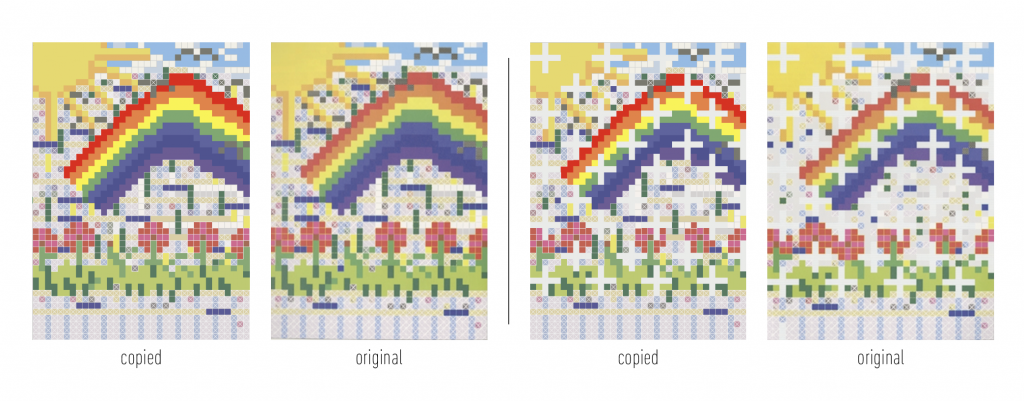
This project reframes Excel as an active system rather than a passive tool.
Through copying, iteration, and emergent experimentation, I moved from image reproduction to behavioural observation.
The final outcome is not a single image or a finished game, but a process. Iteration revealed how structure, repetition, and constraint shape both visual and temporal experience.
By allowing the system to operate autonomously, I was able to observe Excel’s internal logic and biases.
The process itself became the main result of the project.
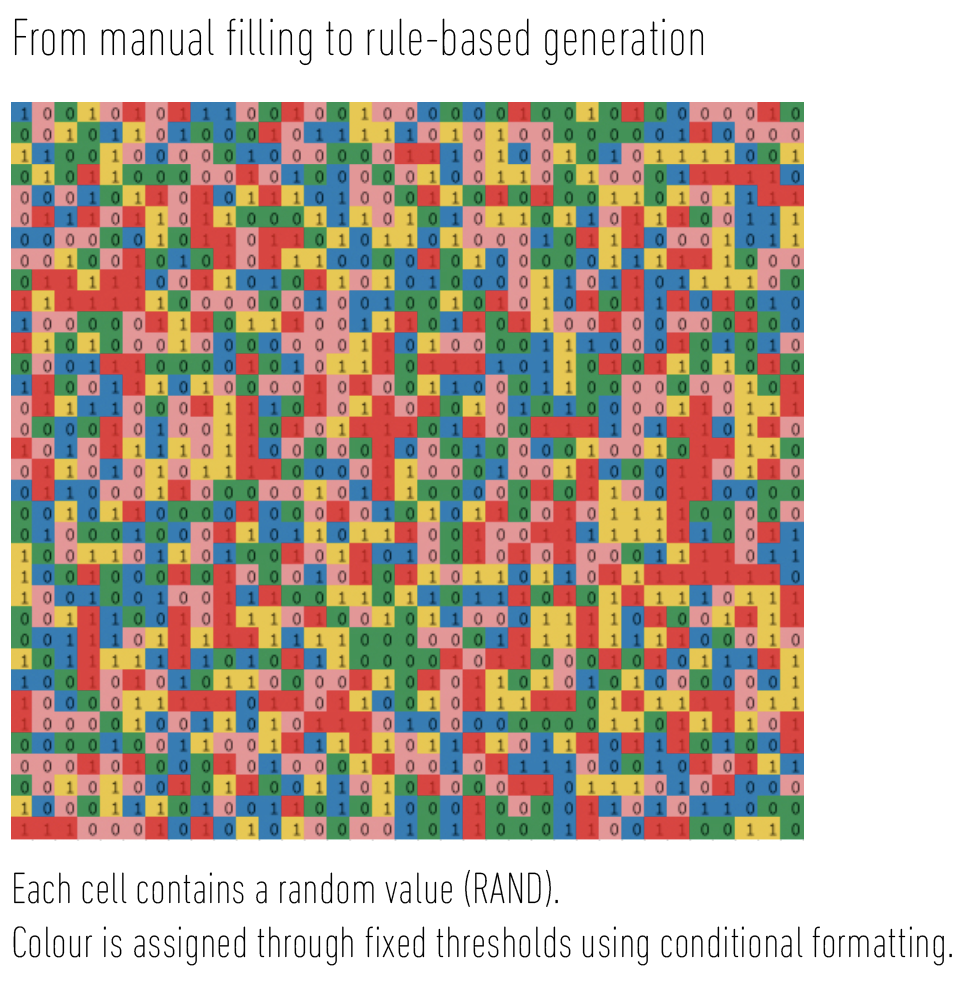
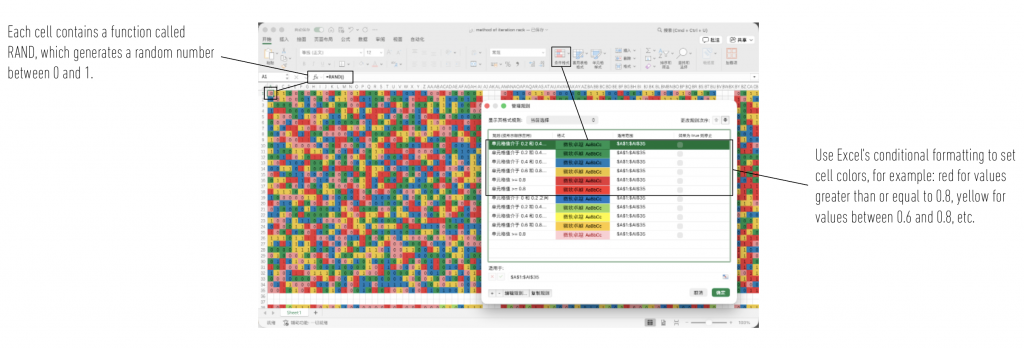
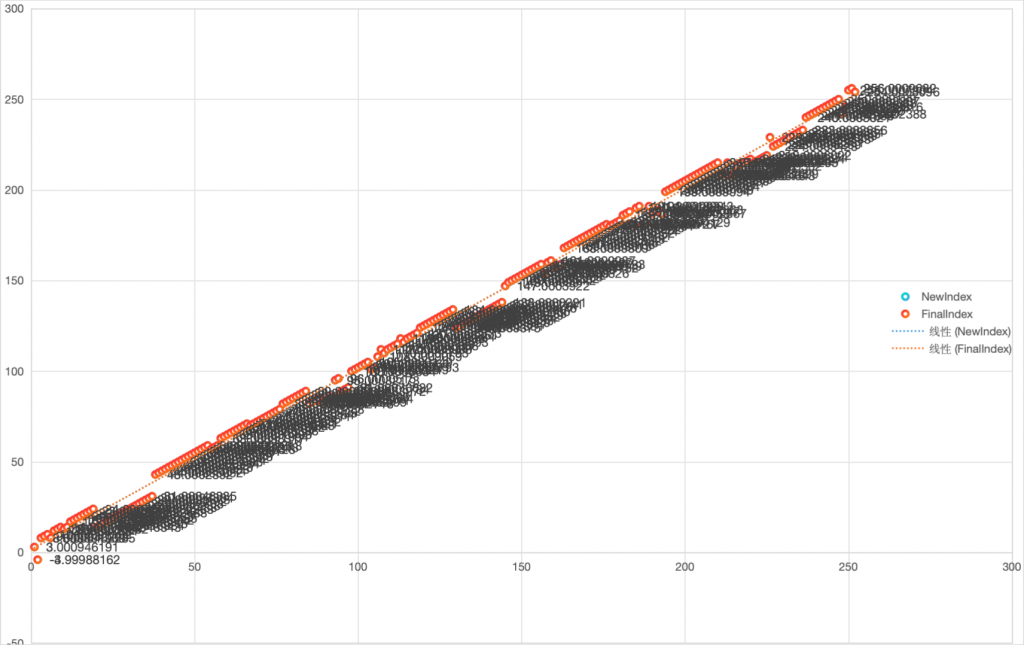
After completing the copy, I shifted from manual composition to rule-based experimentation. Instead of adjusting visuals directly, I introduced the RAND() function to generate random values between 0 and 1 in each cell.
Randomness was only used once as a seed. Each result was frozen and then reused as the input for the next iteration.
Repetition and Observation
The purpose of repetition was not refinement but observation. By applying the same rule repeatedly, I could observe how the system behaves over time.
Through multiple iterations, Excel began to reveal its own tendencies:
Stable distributions
Modular repetition
Resistance to smooth transitions
Unpredictable yet balanced outputs
Influenced by the Conditional Design Workbook, I began to understand design not as producing fixed forms, but as constructing conditions under which forms emerge.
Iteration became a method of enquiry rather than improvement.
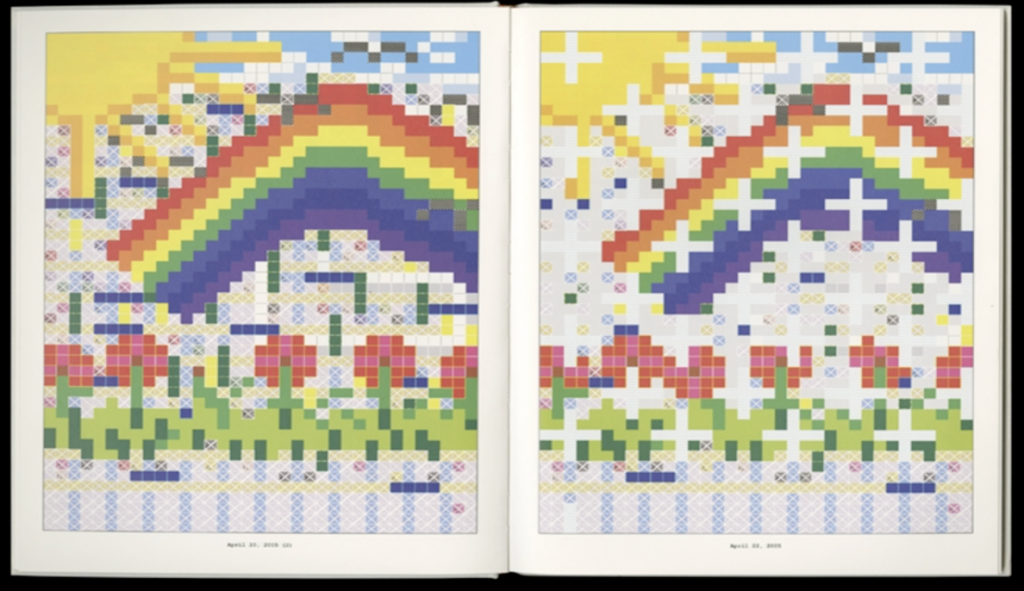
For this project, I chose Microsoft Excel as my main tool. I was interested in exploring how a software typically used for data organisation could function as a visual medium. I began by copying Danielle Aubert’s Excel drawings as faithfully as possible.
Copying Process
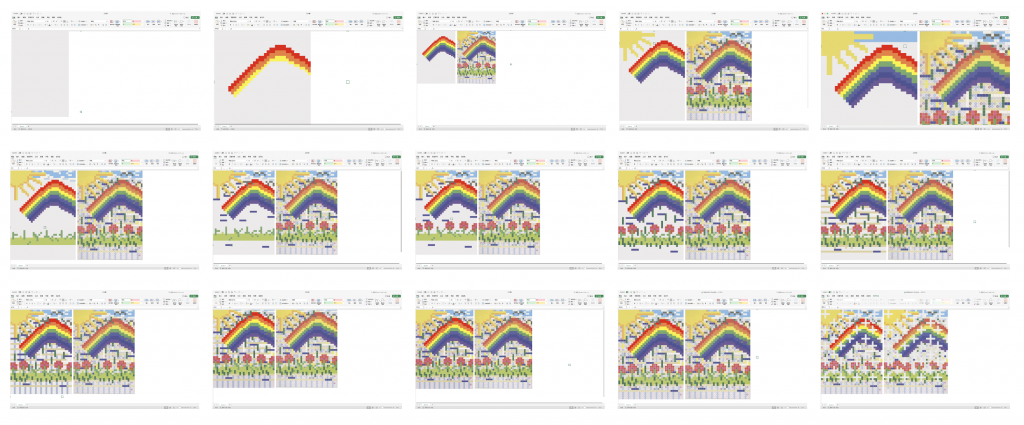
The purpose of copying was not simply reproduction, but analysis. By reconstructing the image cell by cell, I began to understand how Excel’s grid structure actively shapes visual form. The fixed dimensions of cells, the limited color logic, and the alignment rules constantly influenced my decisions.
Attempts to refine the image often resulted in stepped edges and rigid pixel-like transitions. Rather than gaining more control, I became aware of the structural limitations embedded within the tool.
Reflection
Through copying, I realised that Excel is not a neutral drawing surface. It enforces modularity, repetition, and discrete segmentation. These constraints became the starting point for further experimentation.
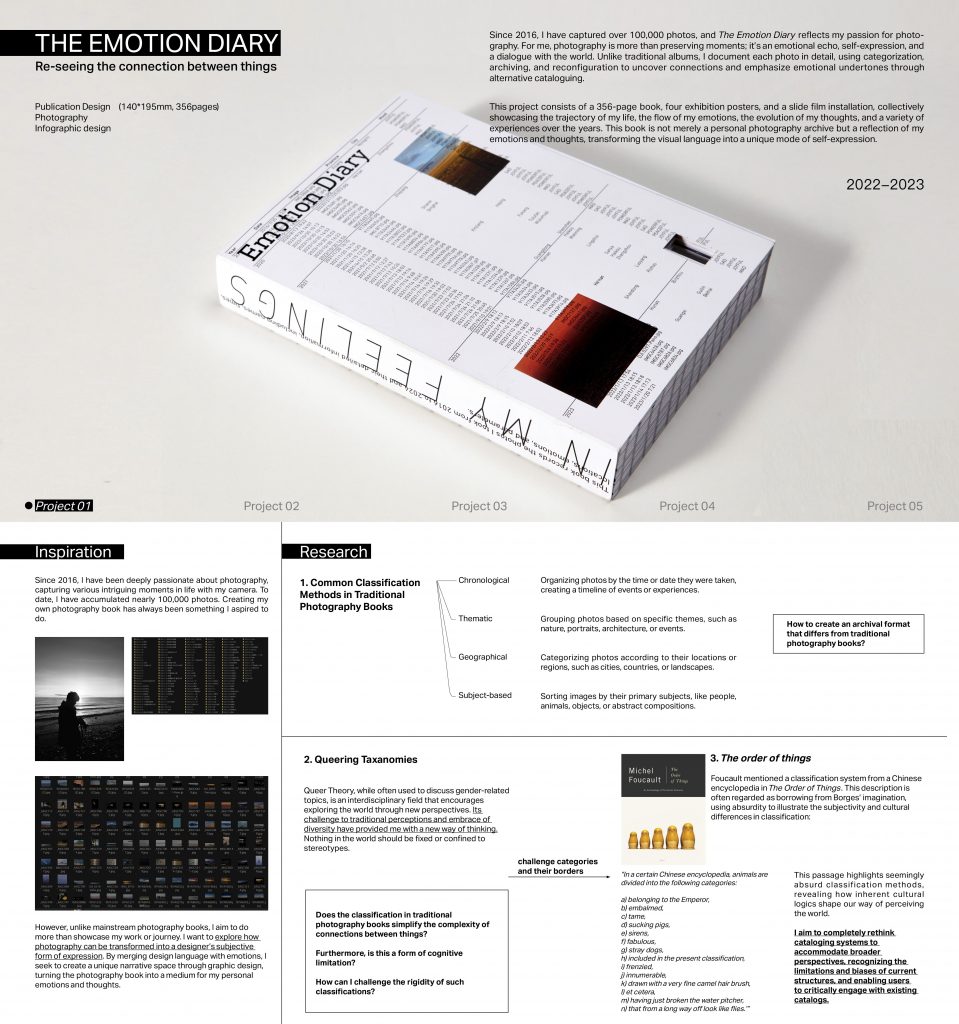
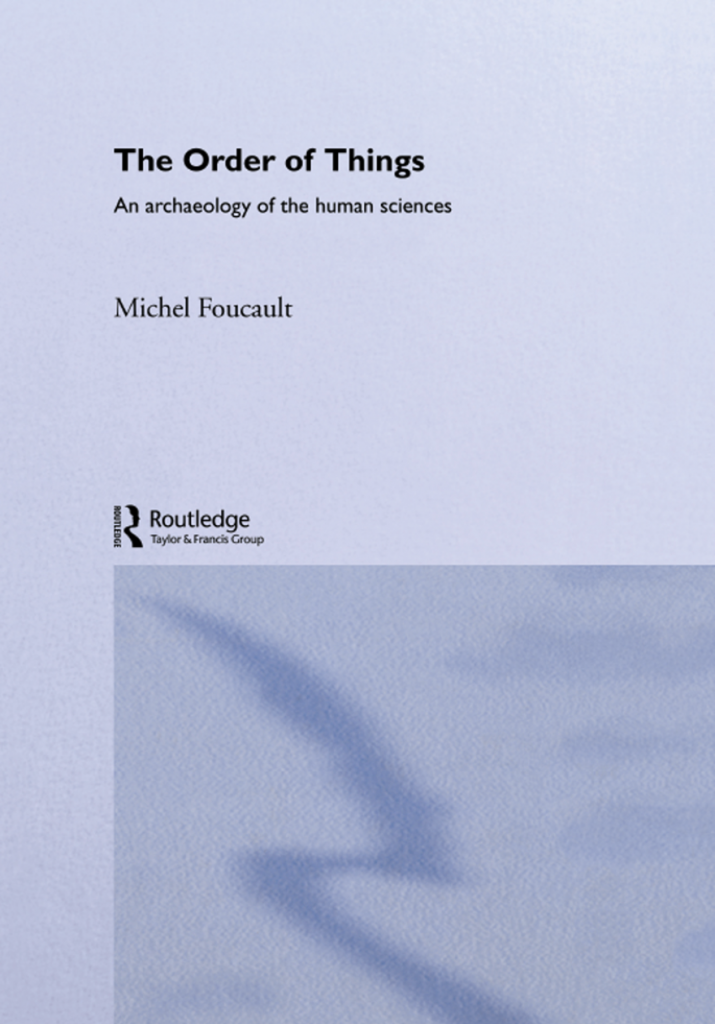
In this response, I selected Michel Foucault’s The Order of Things and represented its main ideas through the form of Conditional Design Manifesto. Foucault discusses how knowledge and meaning are not fixed, but organized by systems of classification that change through history. What we think we “know” is not only about truth, but also about how things are arranged — the hidden logic behind language and categories.
I was drawn to this because my project also deals with systems of organization. By collecting and analysing the metadata of my own photographs — ISO, shutter speed, aperture, and time —I tried to see how emotion could be understood as a form of order. In a sense, I was doing what Foucault described: not discovering emotion itself, but creating a framework that allows emotion to appear.
To translate The Order of Things, I used the method of Conditional Design Manifesto,which turns abstract theory into simple design rules. Instead of writing in philosophical language, I rephrased Foucault’s ideas as guiding principles for creative practice. For example: “We classify not to define, but to feel” and “To understand is not to control, but to resonate.” These short statements helped me reimagine how systems — even mechanical ones like metadata —can contain traces of emotion, personality, and sensitivity.
This approach made me think about writing and design as parallel forms of translation. Foucault built a system to explain knowledge;I built one to explore feeling. Both are ways of turning invisible structures into visible experiences. By rewriting theory as a set of creative conditions,I found that data can be poetic, and that structure itself can express emotion.
In the end, I learned that translation is not only about language,but also about how we organize experience. Through this experiment, I discovered that emotion, data, and design are not separate —they are different ways of arranging the world and understanding ourselves.
References Foucault, M. (1966). The Order of Things: An Archaeology of the Human Sciences. London: Routledge. Blauvelt, A., Klanten, R., et al. (2008). Conditional Design Manifesto. Rotterdam: Graphic Design Museum.
Following last week’s exploration of translating photographic metadata into emotions,this week I continued to refine the method and visualize my findings.
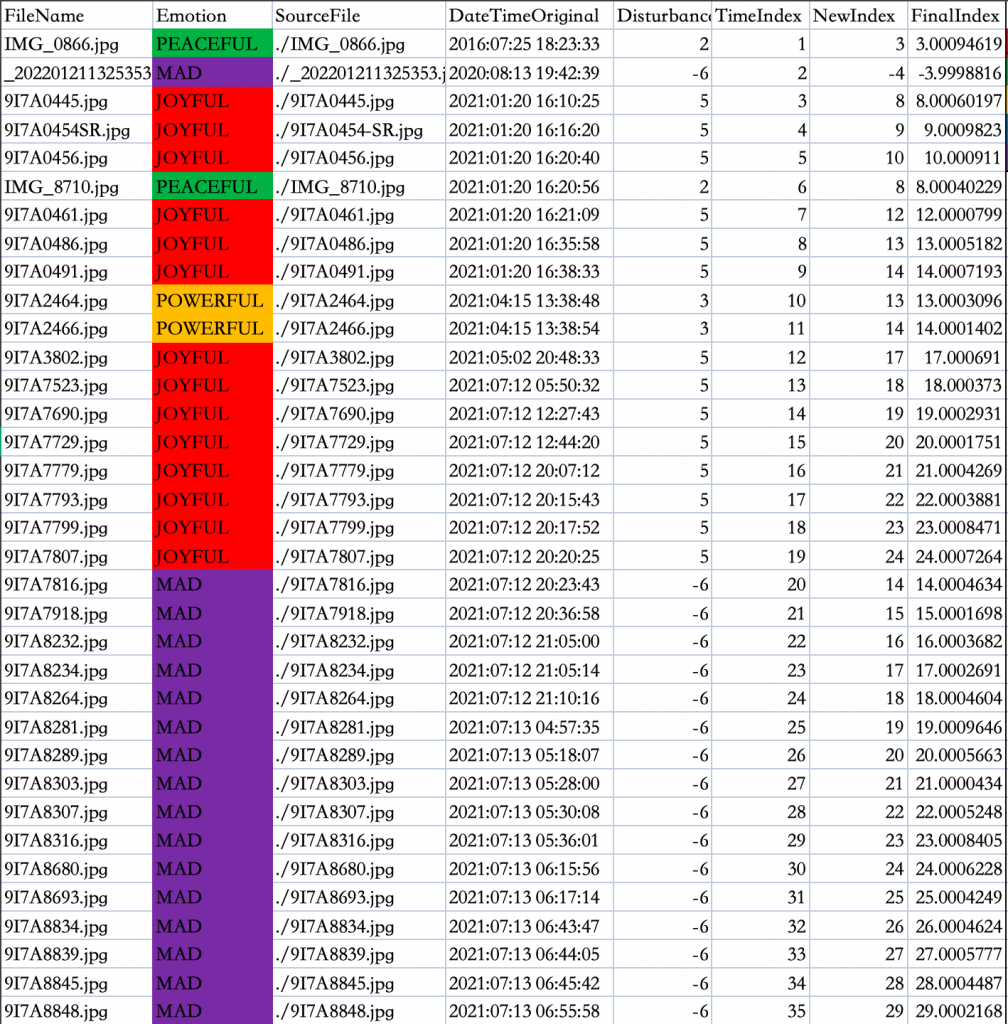
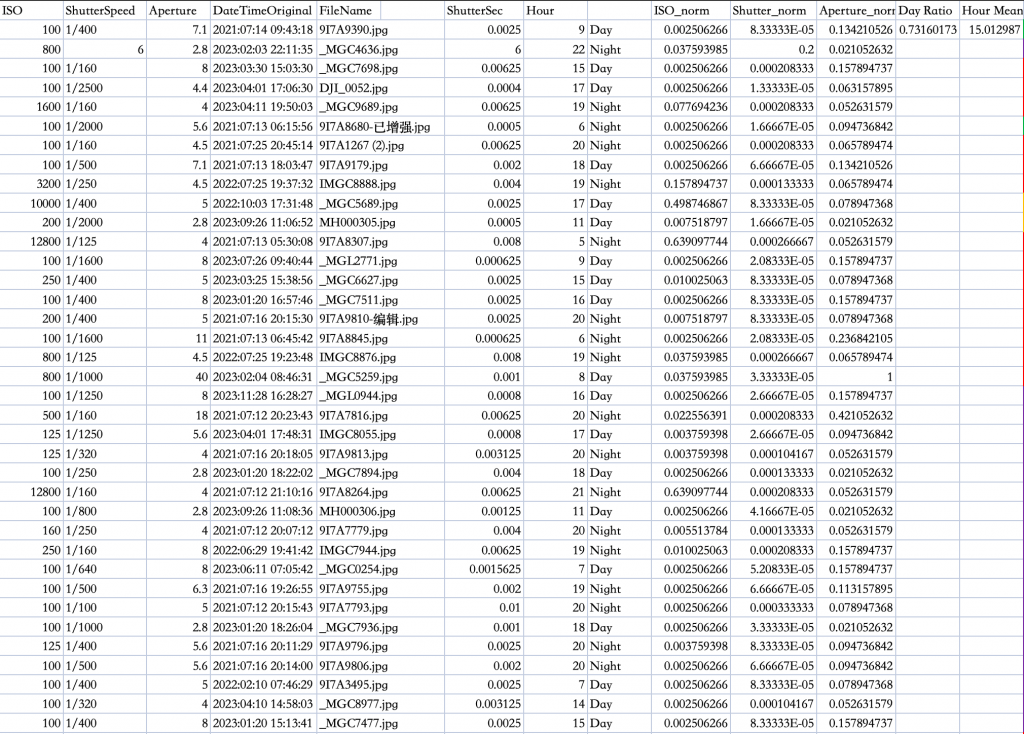
I created a clearer data table that organizes each photograph’s metadata — including ISO, shutter speed, aperture, and time of capture. Rather than simply assigning emotions,I focused on how these numbers reveal patterns of behavior and perception.
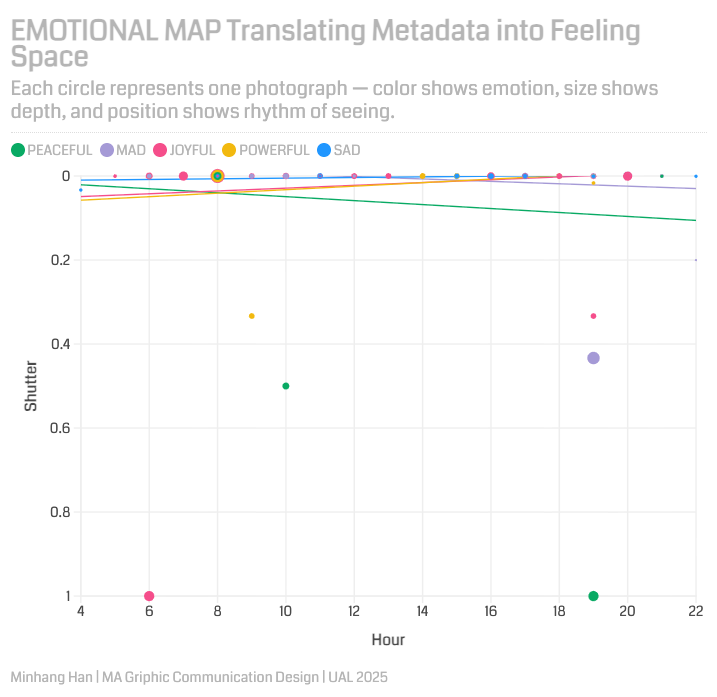
Through visualization, I translated these technical parameters into a map of feelings.Each circle represents one photograph:its color shows emotion, size shows depth, and position shows the rhythm of seeing. This emotional map suggests that data can also describe a person —their sensitivity to light, their rhythm of attention,and even their emotional tendencies when observing the world.
By analyzing my own data, I discovered that:
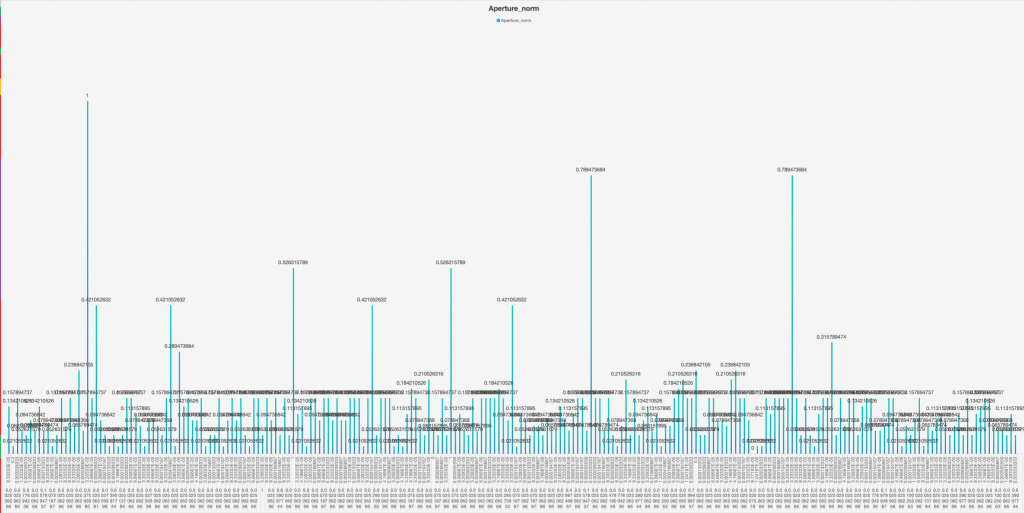
ISO: 80% of photos are above 1000 — I prefer low light, quiet environments.
Time: concentrated between 5–7 p.m. — I tend to be more emotional at dusk.
Aperture: around f/2.8 — I like intimate, shallow focus.
Instead of reading emotions from visible images,I began to understand the personality behind the process of taking them. This, to me, is the essence of translation —transforming invisible data into emotional understanding.
Reflection
Through this process, I realized that translation is not about substituting words, but about revealing relationships —between data and emotion, between self and behavior, between numbers and perception.
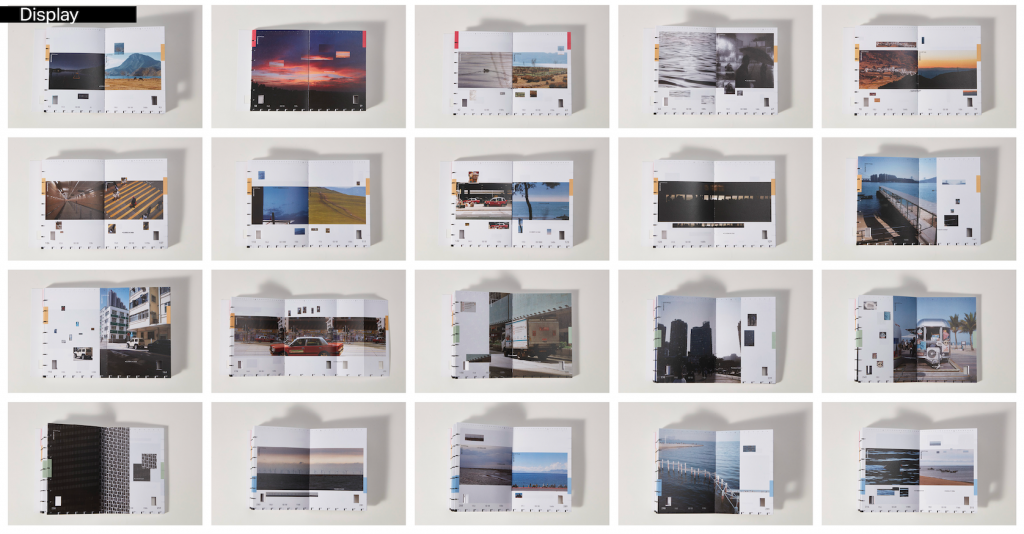
In the first week, I began by exploring how translation can go beyond language — not just translating words, but translating ways of seeing.
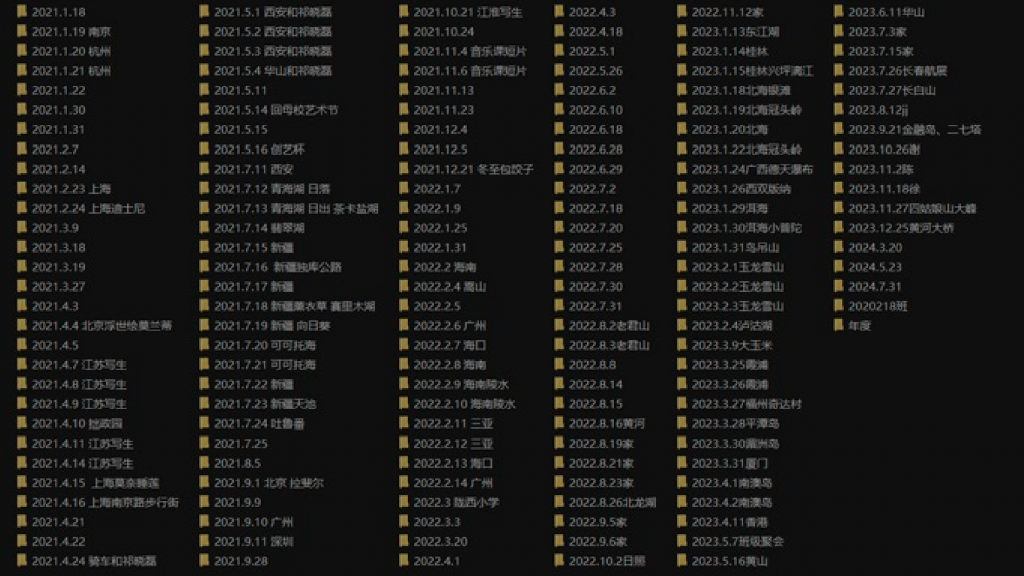
Inspired by the idea that metadata can describe our behavior unconsciously,I decided to use my own photographic data as the raw material for translation.
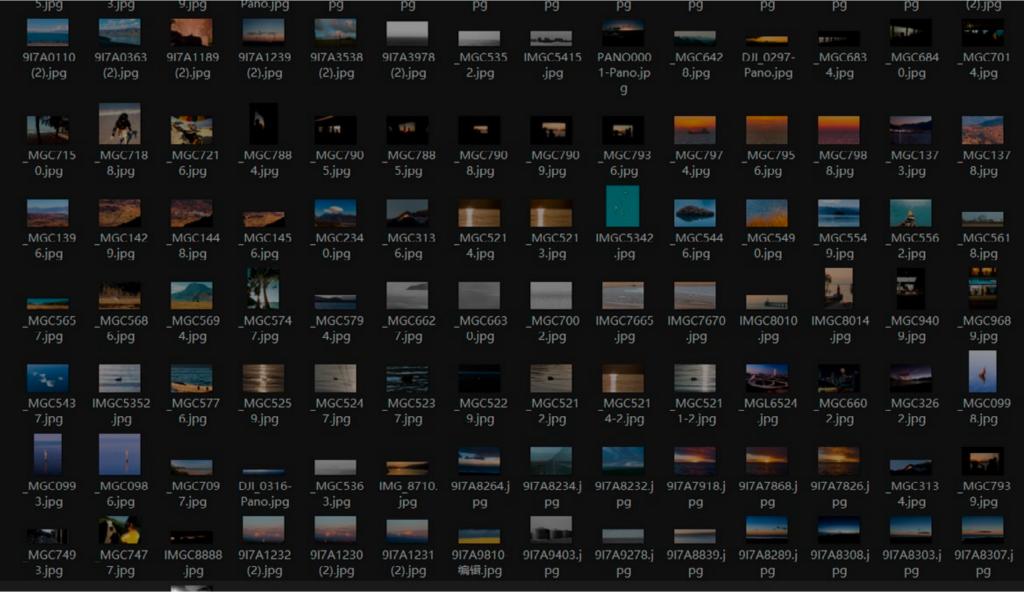
Every photo I took carries hidden technical information — ISO, shutter speed, aperture, and time.These parameters are mechanical, but also deeply emotional. They reflect how and when I observe the world.
method 1method 2
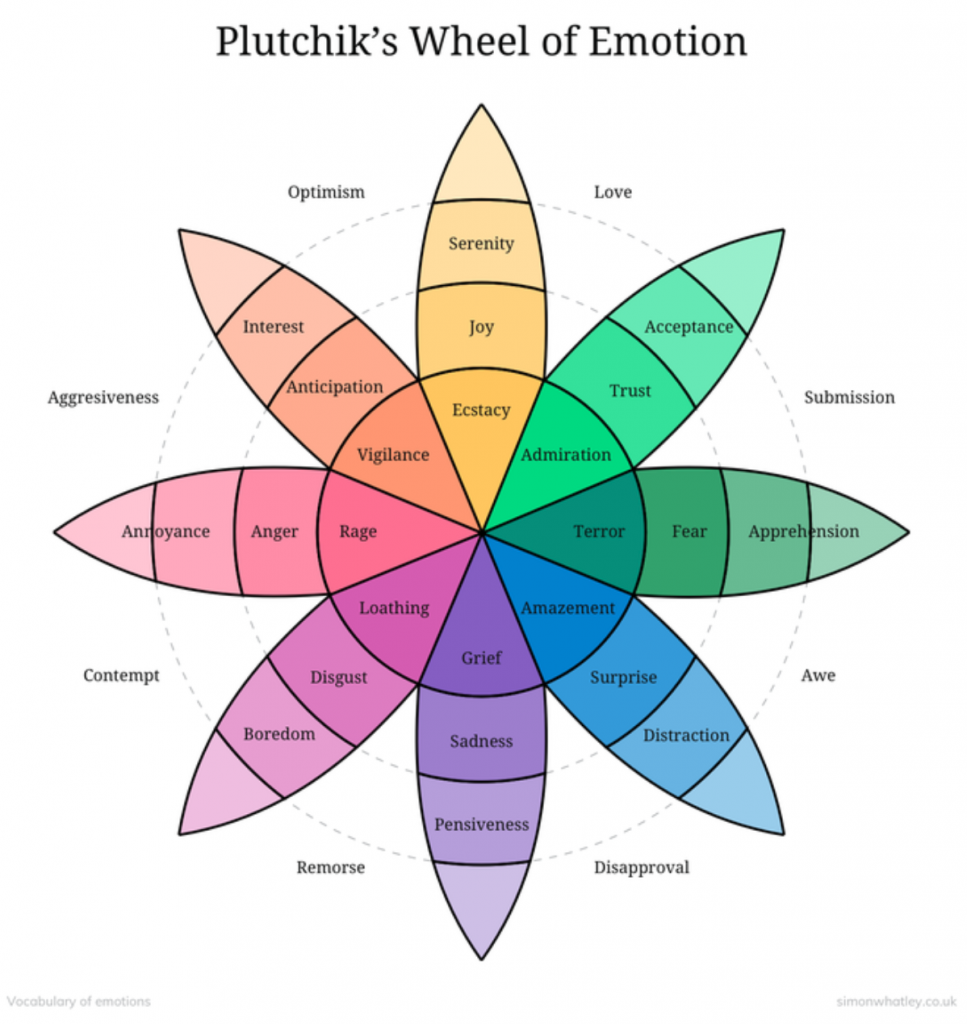
I started experimenting with tables to organize these invisible traces.Then I tried to “translate” them into emotional categories such as Joyful,Peaceful,Mad,Powerful, and Sad.
This became my first method of translation —converting technical parameters into a system of feeling.
Visual table 1Visual table 2
Through this process, I began to see data as a personal language:a way to express emotion without words,and to read personality through the rhythm of taking pictures.
In The Order of Things, Michel Foucault explores how systems of knowledge are constructed through invisible rules of classification.
He argues that what we consider as “truth” or “order” is never neutral — it is produced by the ways we categorise and name things. In this sense, Foucault’s writing can itself be read as a catalogue of systems, an archive of how human thought organises the world.
Applying the method of cataloguing, I approached the text as a structured collection rather than a linear argument. I designed an inventory that breaks the text into three main elements: 1️⃣ Words that describe order and system (e.g., “classification”, “arrangement”, “taxonomy”), 2️⃣ Words that indicate power and control (e.g., “knowledge”, “discourse”, “limit”), and 3️⃣ Words that reveal instability (e.g., “difference”, “gap”, “ambiguity”).
This inventory shows how Foucault’s language itself performs the logic he describes — constructing systems while simultaneously exposing their fragility. The repetition of these terms forms a rhythm, a pulse of philosophical “cataloguing” that both builds and questions structure.
As metadata, I also noted the text’s tone and structure: Foucault writes in long, looping sentences that create a feeling of accumulation — like an ever-expanding archive. His rhetorical rhythm mimics the very act of cataloguing: assembling fragments, linking them, and challenging their hierarchy.
By cataloguing Foucault’s language, I realised that his work is not only about systems of knowledge, but also a reflection on how we store and classify meaning itself. In my own project, I translated this into the cataloguing of physical traces — folds, stains, and marks — to reveal how human presence constructs another kind of order, one made of memory and time rather than logic and language.
Thus, both Foucault’s text and my visual catalogue investigate how order emerges from chaos, and how every system, whether linguistic or material, always contains the possibility of disorder within it.
References
Foucault, M. (1989) The Order of Things: An Archaeology of the Human Sciences. London: Routledge. (Originally published in French, 1966)
Anderson, B. (2006) Census, Map, Museum: Imagined Communities. London: Verso.
Derrida, J. and Prenowitz, E. (1995) ‘Archive Fever: A Freudian Impression’, Diacritics Journal, 25(2), pp. 9–63.
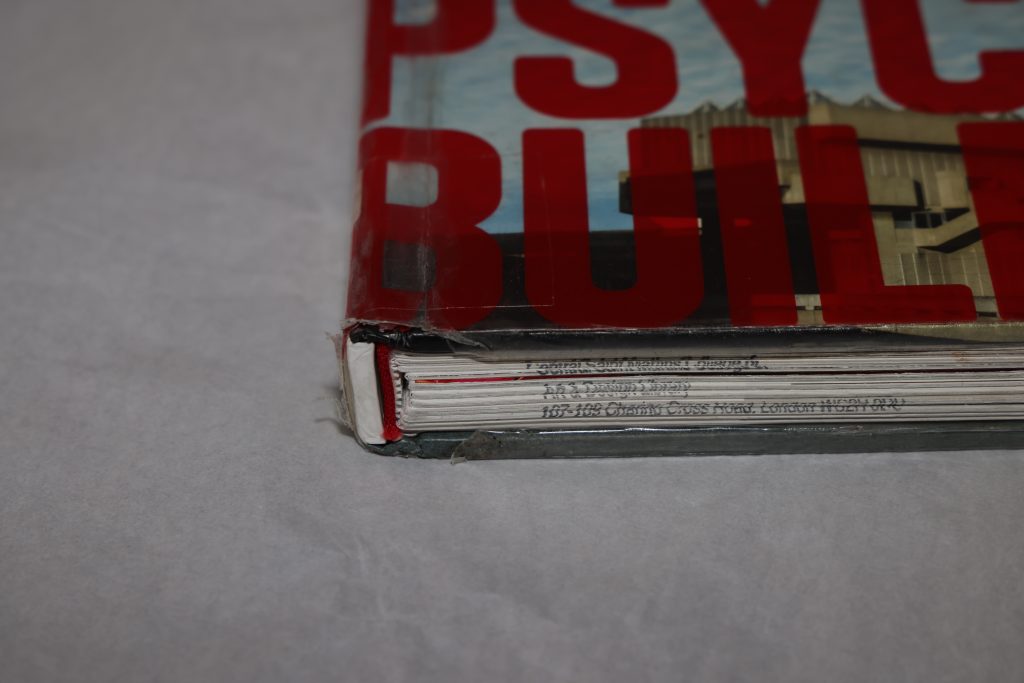
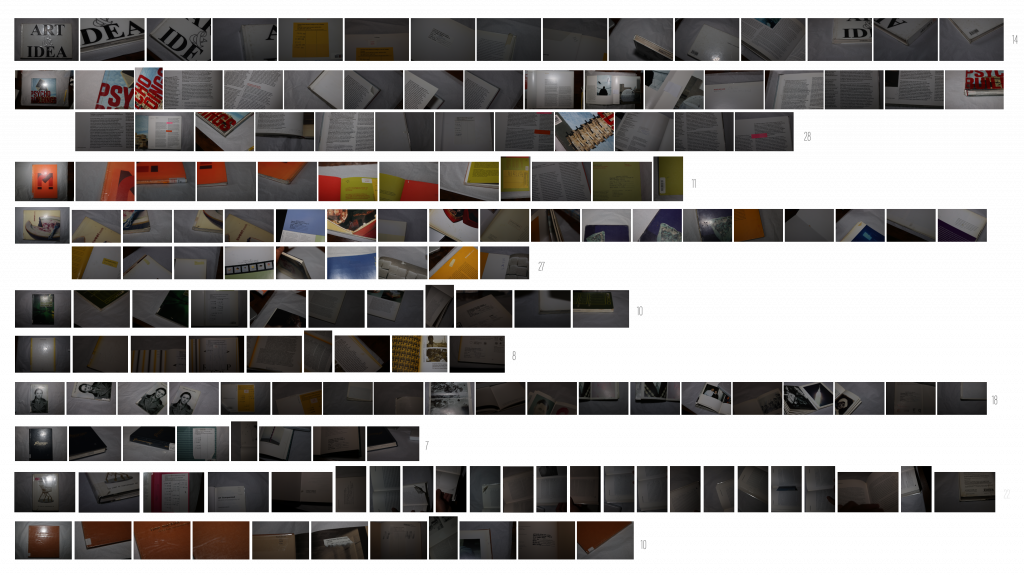
After photographing ten consecutive library books, I started to analyse how each trace—folds, stains, notes, torn edges, and dust—reveals different kinds of interaction between people and books. By scoring and comparing these marks, I found patterns that reflected the rhythm of use and the passage of time.
At the same time, I began to test how these traces could speak visually. I transformed my table of scores into visual compositions in InDesign, and experimented with short texts that describe or imagine the gestures behind each mark. This helped me move from a “typological catalogue” towards a more “narrative and conceptual” understanding of cataloguing — where classification slowly becomes story and rhythm.
What I Learned:
I learned that cataloguing is not only about creating order, but also about revealing relationships — between people, objects, and time. Even a scientific system can contain emotional meanings. When the same mark appears across different books, it connects anonymous readers through shared gestures of holding, folding, and touching.
Reflection and Next Step:
Through this short two-week project, I moved from observing to systematising, and finally to interpreting. I realised that every catalogue reflects the person who makes it — what they choose to include, how they define importance, and how they translate material into meaning. If I could continue this project, I would expand it into different collections or compare traces from public and private books to explore how use and memory change in different contexts.
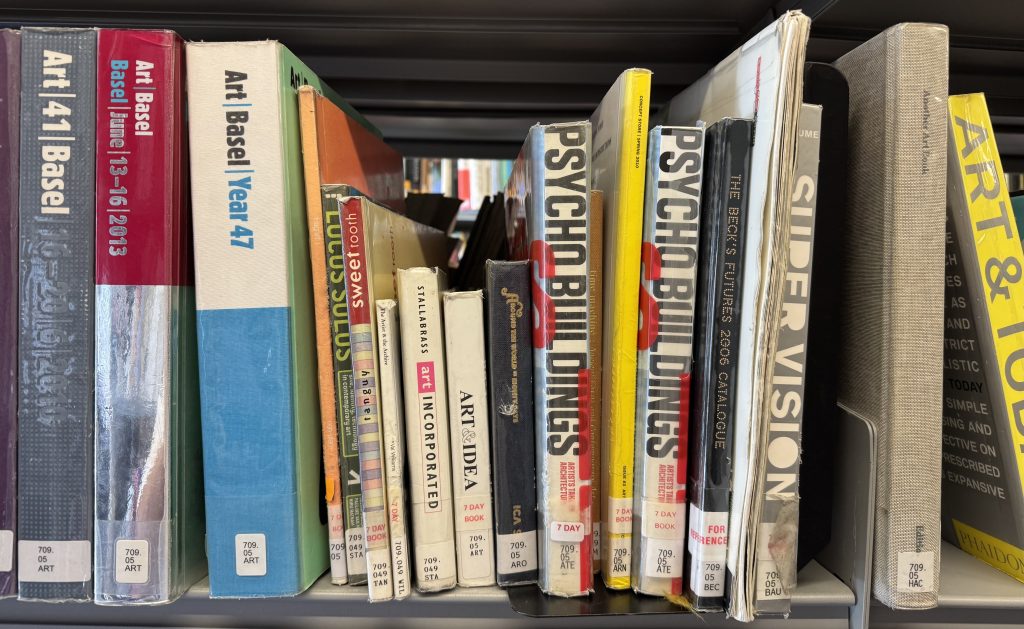
In this project, I chose to work with ten consecutive books from the CSM Library shelf. Instead of focusing on the text or content, I became interested in the human traces left on these books — folds, stains, annotations, fingerprints, inserted objects, and even untouched blank pages.
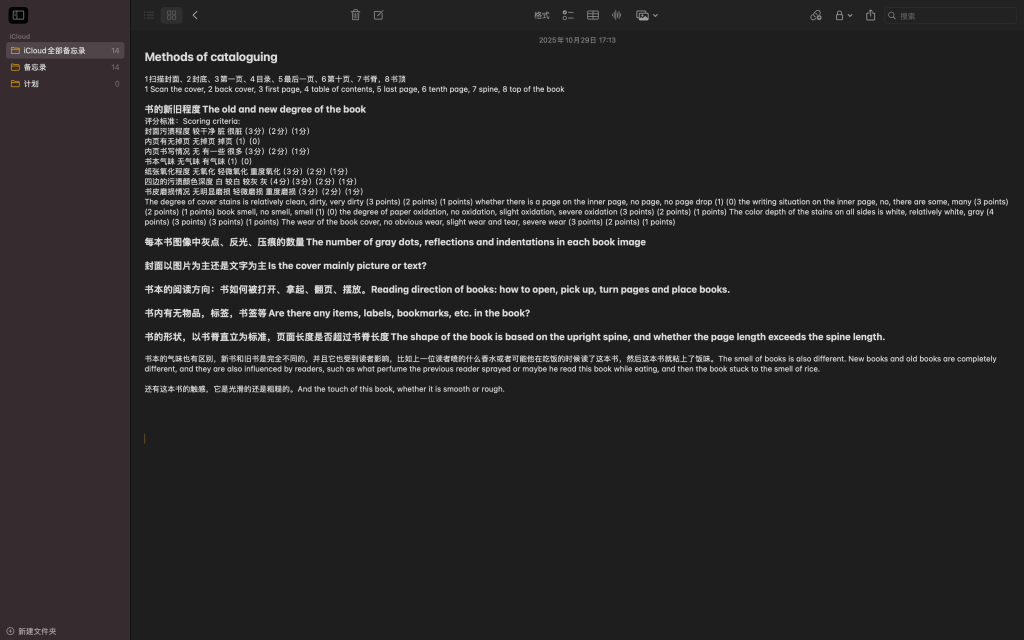
At first, I was unsure how to define “cataloguing.” During the briefing, I realised that a catalogue is not only about classification, but also about understanding the relationships between things. So, I decided to explore how the traces of human reading could be organised, read, and reinterpreted through different cataloguing methods.
I started photographing the books one by one — scanning the cover, spine, first page, tenth page, index, and the edges of paper.
Through these images, I noticed subtle differences: some books were clean, some were heavily marked, and some even carried faint smells or worn textures. Each book became a small record of human presence.
What I Found Interesting:
While comparing the images, I found that every mark carried a story. Some folds looked like a pause in reading; some stains revealed someone’s coffee habit; some pencil lines felt like quiet conversations between the reader and the author.
I started to think of these traces as a hidden system — a catalogue made not by librarians, but by readers’ gestures. It made me ask: Can we read the history of human touch through these accidental marks?
The Feedback:
During the tutorial, my tutor suggested that I should go beyond documentation and think about how to translate these traces into systems or visual languages. The advice was to:
Create a clear typological structure (classification by type and condition);
Try to assign visual or emotional meaning to each mark;
Use different cataloguing approaches (scientific, narrative, conceptual).
Reflection:
Through this week’s experiment, I realised that cataloguing can be more than an archival method. It can be a creative language to describe how people interact with objects, and how time leaves evidence on materials. My next step is to develop these ideas into three cataloguing systems from order, to meaning, to time and see how the invisible traces of reading can be made visible again.
To Do Next Week:
Continue photographing all ten books consistently (same lighting and framing).
Start building a Typological Catalogue — classifying the traces by physical type and condition.
Experiment with a Narrative Catalogue — short texts or captions that imagine the stories behind each mark.
Begin exploring Layered Catalogue — overlapping traces to visualise collective rhythm and memory.
Over the past weeks, my project has developed from a simple act of observing a public bench into a study of how time, traces, and absence can be visualised through photography.
At first, I was interested in how people used the bench — when it was busy or empty, and how it reflected patterns of daily life. Gradually, my attention moved to what was left behind: bottles, cans, and plastic bags.These small, overlooked objects revealed a rhythm of human presence that continued even after people were gone.
This idea echoes Georges Perec’s approach in Species of Spaces (1974), where he describes the act of noticing “what happens when nothing happens.” Like Perec, I tried to see the ordinary as meaningful, using observation as a method to make time visible.
Through repeated photography, long exposure, and image layering, I began translating time into visual form. The process made me realise that photography can both record and construct memory.The overlapping images, with their distortions and “glitches,” visualised time not as a line, but as an accumulation — a form of memory that is always partial and unstable.
From the tutorial feedback, I also reflected on David Hockney’s photographic collages, which combine multiple viewpoints into one image.This inspired me to think beyond time and consider space — how different perspectives could be layered to build a multidimensional record of observation.
Finally, I was influenced by Agnès Varda’s films, especially her sensitivity to everyday life and traces of human presence.Her idea that “cinema is the art of showing time passing” helped me understand how still and moving images can both reveal hidden rhythms of public space.
Overall, this project taught me that observation itself can be a creative act. To observe is to construct; to record is to interpret. Time Left Behind is not only about what people leave, but also about how we see — how traces become evidence of time, memory, and change.
References:
Perec, G. (1974). Species of Spaces and Other Pieces. London: Penguin Classics.
Varda, A. (2000). The Gleaners and I [Film]. Ciné-Tamaris.
Hockney, D. (1982). Photographic Collages. London: André Emmerich Gallery.